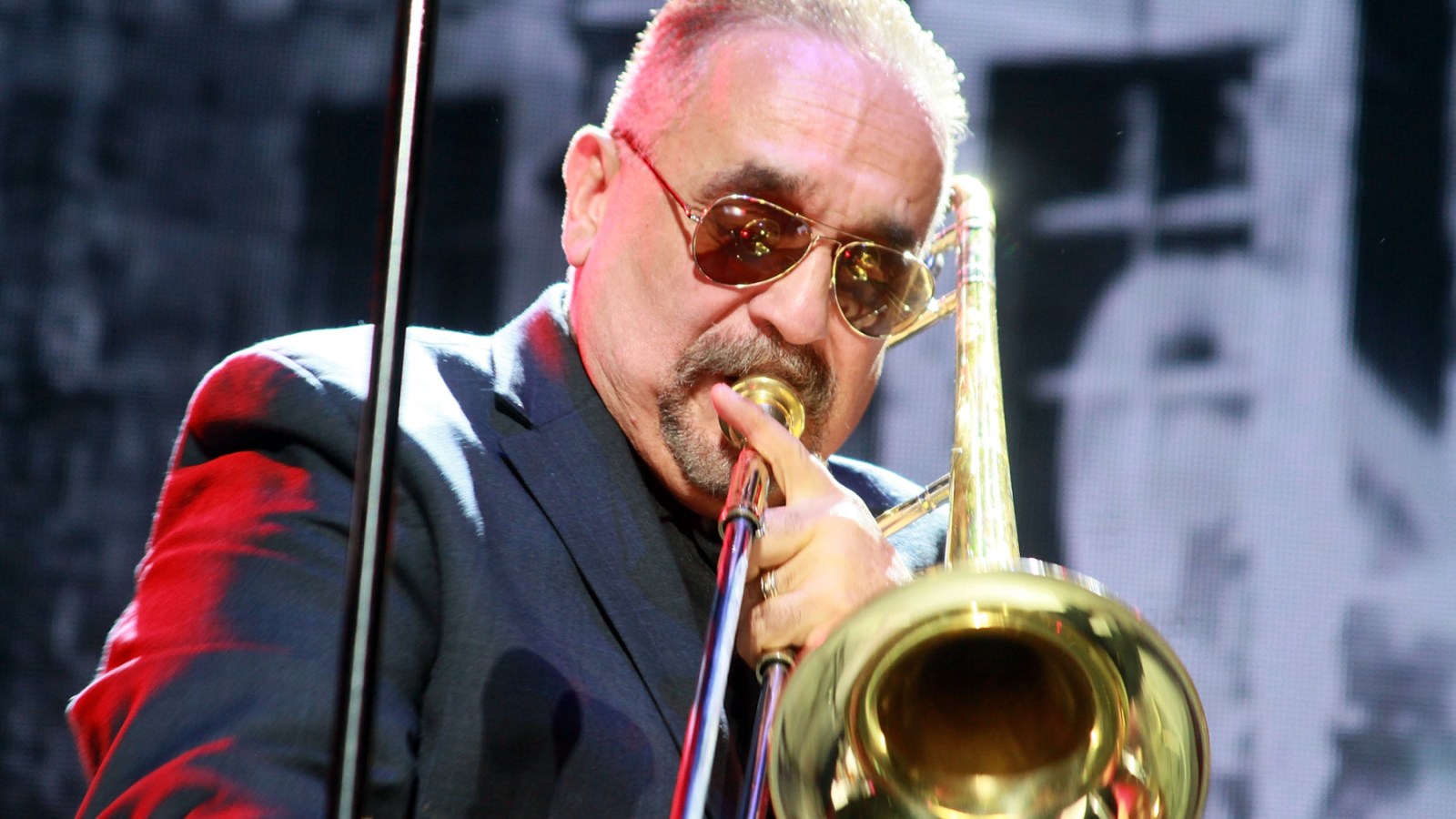
Willie Colón, the legendary salsa icon, died Saturday morning, his family confirmed. He was 75. A cause of death has not been disclosed.
“It is with profound sadness that we announce the passing of our beloved husband, father, and renowned musician, Willie Colón,” his family said in a statement on his official Facebook page. “He departed peacefully this morning, surrounded by his loving family.”
The statement continued, “Although we mourn his absence, we also rejoice in the eternal gift of his music and the cherished memories it created, which will live on forever.”
Born William Anthony Colón Román on April 28, 1950 in the Bronx in New York City, the musician embraced his Puerto Rican heritage, learning to speak Spanish from his grandmother Antonia.
He launched his six-decade career as a teenager, releasing his first album, 1967’s El Malo, at the precocious age of 16 alongside Héctor Lavoe. Their partnership was a fruitful one, the duo became one of record label Fania Records’ most important salsa acts.
“Today we bow our heads as the world mourns the loss one of the greatest artists of our time — the incomparable Willie Colón: legendary trombonist, visionary composer, master arranger, emotive singer, bold producer, fearless director, and tireless innovator,” Fania Records said in a statement.
“We are heartbroken by the passing of an icon whose sound transcended the dance floor and defined an era. A pillar of Fania Records, Willie helped bring Latin music from the streets of New York to audiences around the world,” the statement continued. “His music declared identity, pride, resistance, and joy. His music was not just heard; it was lived.”
Lavoe provided the young Colón music lessons, encouraging the musical prodigy to be innovative with instrumentation and song structure.
Colón’s love for music began years prior, while in elementary school, where he played the flute, and shortly after the bugle. By age 13, he picked up the trumpet and began taking lessons, all of these early musical forays informing his distinguished technique and style.
He composed a salsa classic with Lavoe in 1969, “Che Ché Colé” from Cosa Nuestra, infusing Afro-Caribbean music with Puerto Rican rhythms. Their pioneering sound was the bedrock that led to salsa’s enduring popularity, which erupted in the Seventies.
In 1976, he turned experimental eye to producing a ballet, “El Baquiné de Los Angelitos Negros,” introducing his symphonic salsa style.
The Seventies also ushered in another fruitful partnership, with Panamanian singer-songwriter Rubén Blades. Though their first collaboration came by way of 1977’s Metiendo Mano! that showed the promise of what was to come, it was the album that followed that cemented the greatness of their partnership. The 1978 album, Siembra, which landed at Number One on Rolling Stone’s Best Salsa Albums list, became the best-selling salsa album of all time, a distinction it kept for decades.
By the end of the Seventies, he ventured into a solo career and also worked in film and television and was known for being a sociopolitical activist later in life.
Over Colón’s prolific career he crafted more than 40 albums, earning him nine Gold and five Platinum records. His discography — he sold more than 30 million albums worldwide, per Fania, over the course of his career — includes his collaborations with Lavoe, Blades, Celia Cruz, David Byrne, Soledad Bravo, and Ismael Miranda. He was nominated for eight Grammy Awards and earned a Lifetime Achievement Award from the Latin Recording Academy in 2014.
