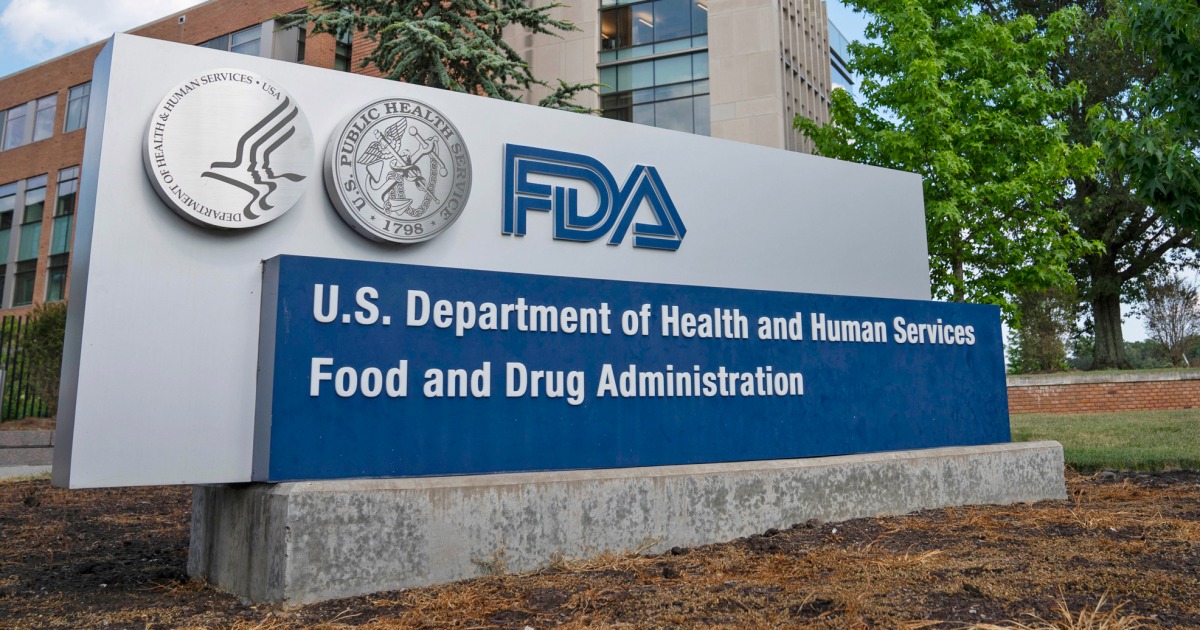
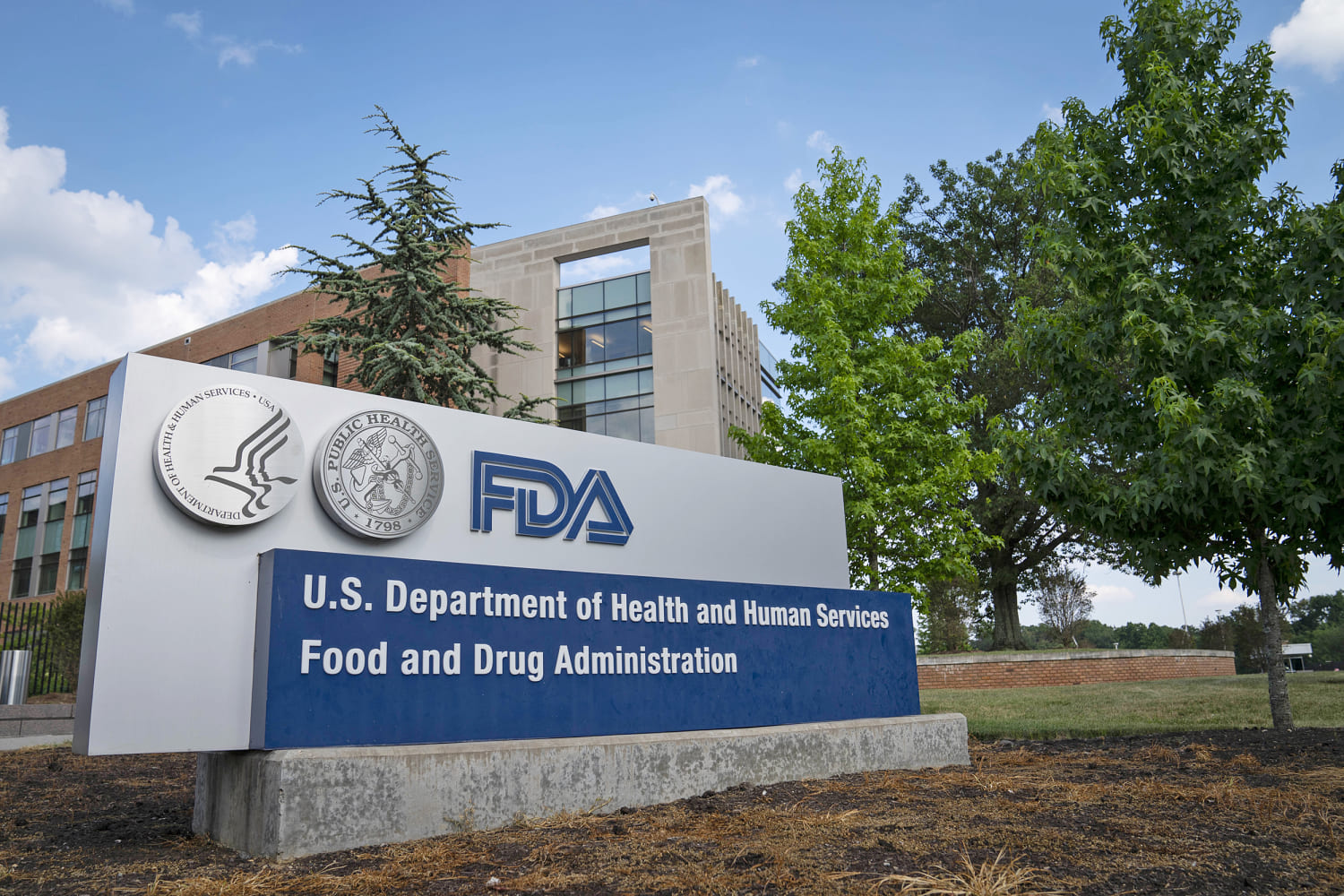
The Food and Drug Administration on Wednesday defended its rejection of Moderna’s mRNA-based flu vaccine application, saying the company’s clinical trial design put patients at risk.
The FDA’s defense, which is unusual for this kind of regulatory decision, came a day after Moderna said it was caught off guard by the move.
The decision lands at a time when drugmakers are trying to improve flu vaccines, and messenger RNA technology is widely seen as one of the most promising tools. But the rejection is also fueling concerns that the FDA, under Health Secretary Robert F. Kennedy Jr., is taking a harder line on mRNA shots.
The dispute centers on what Moderna compared its vaccine against in its clinical trial. The FDA says Moderna used a flu shot that wasn’t the best standard of care, while Moderna says it ran the trial the way regulators had discussed and agreed to.
The FDA said it took particular issue with the standard flu shot given to people 65 and up in the trial. This group is at a higher risk of developing serious flu complications and for whom a high-dose flu shot is also available. Moderna, however, used Fluarix Quadrivalent, a flu vaccine sold by GSK. It’s approved by the FDA but it is not one of the flu shots recommended by the Centers for Disease Control and Prevention for the age group.
On a call with reporters Wednesday, a senior FDA official who would not speak on the record suggested that Moderna’s use of a “substandard” flu shot was an intentional decision by the drugmaker to make its own vaccine look better.
“You can either do what’s right, and give seniors the standard of care that best protects them the best, or you can kind of rig the study so it makes your product look better,” the official said. “This is not a Moderna unique issue, this is an issue that has gone on at the FDA for decades.”
The official denied that the agency gave Moderna incorrect guidance for the trial, or that Kennedy was “directly or indirectly” involved in the decision to reject the company’s application.
It’s possible, the official said, that Moderna could refile its application for a narrower group and “show some humility and that, yes, we didn’t follow your recommendation.”
In an emailed statement Wednesday, Christopher Ridley, a spokesperson for Moderna, said the FDA reviewed and cleared the trial design as adequate before the study began 18 months ago.
“The industry depends on clear, transparent rules that are applied consistently in order to make the long-term investments that benefit Americans,” Ridley said.
Dr. Peter Hotez, dean of the National School of Tropical Medicine at Baylor College of Medicine in Texas and co-director of the Texas Children’s Hospital Center for Vaccine Development, said the public needs to see, in writing, what the FDA had signed off on.
According to Moderna, in 2024, the FDA did recommend using the high-dose vaccine, however, it said it would be acceptable to use the standard flu shot if study participants were informed that a more effective flu shot was available. In 2025, the agency again allowed the existing design.
“What I don’t understand is that Moderna has been interacting on a regular basis with FDA for the last six years. Why now the change?” Hotez said in an email.
Last year, Kennedy ordered that all new vaccines go through placebo-controlled clinical trials — a move that experts said would make it more difficult for new vaccines to get approved. On the call, the FDA official appeared to walk this back, saying Kennedy’s order was “aspirational.”
“I’m guessing FDA just changed the guidance without adequately informing the company,” Hotez said, “or explaining now there are completely different recommendations without any obvious scientific basis.”
Andrew Nixon, a spokesperson for the Department of Health and Human Services, referred NBC News to a statement it released earlier Wednesday, which said the FDA rejected Moderna’s application because it “refused to follow very clear” guidance.
Dorit Reiss, a vaccine policy expert at the University of California Law San Francisco, said she agrees that using a higher dose in the 65 and up would have been better, but faulted the FDA.
“FDA could have demanded it in 2024. It did not,” she said. “Changing course midstream is problematic, and would lead industry, understandably, not to trust the FDA.”
Moderna can still file over the FDA’s objection, Reiss said, but the agency already stated its position on the trials.
“Is it really going to give the application a serious review?” she asked.
